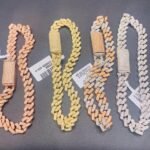

Custom jewelry gives you the opportunity to create something that feels personal from the very beginning.
Instead of choosing a finished piece from a display case, you can participate in the design process. You can influence the style, metal, gemstones, proportions, details, and overall appearance.
That makes custom jewelry especially appealing for engagement rings, wedding bands, anniversary gifts, personalized necklaces, statement pieces, and meaningful family jewelry.
But how does the process actually work?
Many people imagine that custom jewelry starts with a sketch and ends with a finished piece. In reality, several important stages can happen between those two points.
The process may include consultation, inspiration, design development, material selection, computer-aided design, prototyping, production, stone setting, polishing, inspection, and final delivery.
Understanding these stages can help you communicate your ideas clearly and make better decisions before committing to a custom piece.
What Is Custom Jewelry?
Custom jewelry is jewelry created according to a customer’s specific design preferences rather than being selected entirely from an existing collection.
The level of customization can vary.
You might customize a simple piece by changing its metal, gemstone, engraving, size, or length. A more complex project may involve creating a completely new design from scratch.
For example, you could request:
- A custom gold ring
- A personalized pendant
- A custom diamond necklace
- A unique bracelet
- A custom engagement ring
- A personalized name necklace
- A redesigned family heirloom
- A one-of-a-kind statement piece
Custom jewelry can therefore range from a small modification to a completely original design.
At SV Jewels & Co., the website currently highlights custom jewelry and personalized accessories alongside rings, chains, bracelets, and watches. Its contact information also specifically mentions assistance with custom orders. That makes the brand a natural internal destination when readers move from learning about custom jewelry toward exploring available options.
Why Choose Custom Jewelry?
One of the biggest advantages of custom jewelry is personalization.
A ready-made piece has already been designed around a particular aesthetic. Custom jewelry gives you more control over the final result.
You can choose details that reflect your personality, relationship, memories, or style.
For example, someone designing an engagement ring might want a specific gemstone shape, unusual setting, meaningful engraving, or a particular combination of metals.
Someone creating a necklace might want initials, a name, a date, or a symbol with personal significance.
Custom jewelry can also solve practical problems.
Perhaps you have unusually small or large ring measurements. Maybe you want a necklace at a specific length. You might prefer a particular chain width or bracelet size.
Instead of adapting yourself to a standard design, customization allows the piece to be developed around your preferences.
Step 1: Start With Your Idea
The first stage of a custom jewelry project is usually the idea.
You do not need to be a jewelry designer to have a good starting concept.
Your idea might be as simple as:
“I want a simple gold ring with one gemstone.”
Or it could be much more detailed.
You may already have photographs, sketches, Pinterest-style inspiration, family jewelry, gemstone preferences, or examples of jewelry you like.
Start collecting those references.
Think about the jewelry you already wear and identify what you like about it.
Consider:
- Metal color
- Jewelry size
- Gemstone shape
- Chain length
- Ring width
- Bracelet thickness
- Setting style
- Level of sparkle
- Modern versus traditional styling
This information helps turn a general idea into a design direction.
You can also look through existing collections for inspiration. For example, browsing rings, bracelets, chains, and luxury jewelry can help you identify styles you want to recreate or modify.
The goal at this stage is not to have every detail decided.
It is to establish a clear creative direction.
Step 2: Discuss Your Budget
Budget should be discussed early.
This is one of the most important parts of the custom jewelry design process because your budget can influence almost every design decision.
The final cost may depend on factors such as:
- Metal type
- Gold karat
- Metal weight
- Gemstone type
- Gemstone size
- Diamond quality
- Number of stones
- Design complexity
- Labor
- Setting method
- Engraving
- Production requirements
For example, changing from a smaller gemstone to a larger gemstone can significantly affect the overall cost.
Likewise, a heavy solid-gold design may require considerably more material than a lightweight version.
Being clear about your budget does not limit creativity.
Instead, it helps the designer create realistic options.
A good custom jewelry conversation should balance three things:
What you want + what you can spend + what can realistically be produced.
Step 3: Choose the Metal
The next stage is selecting the metal.
Common choices include:
- 10K gold
- 14K gold
- 18K gold
- Platinum
- Sterling silver
- Other jewelry alloys
Gold is available in different karat levels because pure gold is relatively soft. The FTC explains that 24K represents pure gold, while 18K contains 18 parts gold and 14K contains 14 parts gold out of 24.
You will also need to consider color.
Yellow Gold
Yellow gold offers a traditional and warm appearance.
It works especially well for classic rings, chains, pendants, and bracelets.
White Gold
White gold provides a brighter, contemporary appearance and can complement diamonds beautifully.
Rose Gold
Rose gold has a warmer pinkish tone and can create a romantic or distinctive appearance.
Platinum
Platinum is another option for people who want a naturally white precious metal with different characteristics from gold.
The right choice depends on your design, budget, lifestyle, and personal preference.
Step 4: Select the Gemstones
If your design includes gemstones, the next stage is deciding what stones should be used.
Diamonds are popular, but they are certainly not the only option.
Custom jewelry can incorporate gemstones such as:
- Sapphires
- Rubies
- Emeralds
- Garnets
- Amethysts
- Moissanite
- Other colored gemstones
You should discuss whether a stone is natural, laboratory-created, or another type of material.
The FTC advises consumers to understand gemstone terminology and determine whether stones are natural, laboratory-created, or imitation.
Treatments can also matter.
Some gemstones receive treatments that improve their appearance. Those treatments can influence care requirements and durability.
For an important custom piece, ask what you are buying and request the relevant documentation when appropriate.
Step 5: Create the Initial Design
Now the concept begins to become a visual design.
A jeweler or designer may create sketches or digital drawings showing how the finished piece could look.
This is where your original idea becomes more specific.
The designer considers:
- Proportion
- Shape
- Balance
- Stone placement
- Metal thickness
- Wearability
- Scale
- Structural requirements
- Overall appearance
A beautiful design is not enough.
The piece also needs to function as jewelry.
A ring needs to sit comfortably on your finger. A pendant needs appropriate proportions. A bracelet needs to move comfortably around your wrist.
GIA’s jewelry design and technology program emphasizes design concepts such as shape, form, balance, negative space, proportion, engineering, durability, and manufacturability.
This explains why professional jewelry design involves more than making something visually attractive.
Step 6: Review and Refine the Design
The first design is not always the final design.
You may look at the initial concept and realize that something needs to change.
Perhaps the band is too thick.
Maybe the gemstone needs to be smaller.
You might prefer a different setting.
The necklace could look better with a longer chain.
This revision stage is important because small changes can make a major difference to the finished piece.
Before approving the design, review details such as:
- Overall size
- Width
- Thickness
- Gemstone placement
- Metal color
- Stone shape
- Setting style
- Engraving
- Personalization
- Comfort
- Expected use
Do not be afraid to ask questions.
Custom jewelry is a collaborative process, and clear communication can prevent disappointment later.
Step 7: Use CAD for Complex Designs
Many modern custom jewelry projects use CAD, or computer-aided design.
CAD allows a jewelry designer to create a detailed three-dimensional model of the piece.
This can make it easier to evaluate proportions, dimensions, structure, and appearance before production.
The model may also help determine how the jewelry can be manufactured.
GIA describes modern jewelry design as involving CAD modeling, rendering, prototyping, engineering, and manufacturing considerations.
For customers, the biggest advantage is visualization.
Instead of relying entirely on imagination, you can review a digital representation of the proposed jewelry.
Depending on the project, the designer may make revisions to the CAD model before production begins.
Step 8: Create a Prototype
Some custom designs may benefit from a physical prototype.
A prototype allows the designer and customer to evaluate the shape and proportions before precious materials are fully committed.
Modern jewelry production can use digital models and 3D printing to create prototypes.
GIA notes that CAD/CAM technology and 3D printing can be used to turn digital jewelry designs into physical prototypes.
A prototype can help answer practical questions.
Does the ring look too large?
Is the pendant proportionate?
Does the setting appear too high?
Does the bracelet have the right visual weight?
Would the design be comfortable for everyday use?
Finding these issues before final production can be extremely valuable.
Step 9: Approve the Final Design
Once the design has been reviewed and refined, you may reach the approval stage.
At this point, important specifications should be clearly documented.
Depending on the project, this may include:
- Final dimensions
- Metal type
- Metal purity
- Gemstones
- Gemstone specifications
- Ring size
- Chain length
- Bracelet size
- Engraving
- Design details
- Price
- Production expectations
- Delivery arrangements
This is also a good time to review the seller’s policies.
The FTC recommends that jewelry buyers research sellers and understand refund and return policies before purchasing.
For custom jewelry, policies can be especially important because customized products may have different conditions from standard stock items.
Step 10: Jewelry Production Begins
After approval, the design moves into production.
The exact manufacturing process depends on the jewelry.
A custom piece may be fabricated, cast, assembled, or produced through a combination of techniques.
One common casting process involves creating a wax or similar model, preparing a mold, casting the metal, and then finishing the resulting piece.
GIA describes jewelry production processes that can include wax preparation, casting, stone setting, polishing, and final quality control.
This is where the digital or physical design becomes an actual piece of jewelry.
Step 11: Stone Setting and Finishing
If the design contains gemstones, stone setting is one of the most important production stages.
The setting needs to hold the gemstone securely while also allowing the design to show the stone effectively.
Different settings can create different appearances.
Examples include:
- Prong settings
- Bezel settings
- Channel settings
- Pavé settings
- Halo settings
- Bar settings
After stones are set, the jewelry can go through additional finishing.
This may include:
- Polishing
- Cleaning
- Surface finishing
- Engraving
- Inspection
- Final adjustments
The goal is to make the finished jewelry look refined while ensuring that the functional details have been addressed.
Step 12: Quality Control
Before a custom jewelry piece reaches the customer, it should be inspected.
Quality control may involve checking:
- Overall appearance
- Stone security
- Metal finish
- Clasp function
- Dimensions
- Engraving
- Structural details
- Sizing
- Surface quality
This stage matters because custom jewelry is often purchased for an important personal reason.
You want the finished piece to match the approved concept as closely as possible.
The FTC Jewelry Guides emphasize accurate representation of material characteristics, quality, quantity, metal content, size, weight, treatment, durability, and other material aspects of jewelry.
Step 13: Final Delivery
After production and quality control, the finished piece is ready for delivery or collection.
Before accepting the jewelry, inspect it carefully.
Check the:
- Overall design
- Metal color
- Size
- Gemstone placement
- Engraving
- Clasp
- Finish
- Documentation
If the piece does not appear as expected, contact the jeweler promptly.
Keep your receipts, invoices, certificates, appraisal documents, and other important records in a safe place.
These documents can be useful for future maintenance, insurance, resale, or verification.
How Long Does Custom Jewelry Take?
There is no single production timeline for every custom jewelry project.
A simple personalized piece may be completed faster than an elaborate custom diamond ring.
The timeline can depend on:
- Design complexity
- Number of revisions
- CAD requirements
- Prototype requirements
- Gemstone availability
- Metal availability
- Production method
- Stone setting
- Engraving
- Quality control
- Shipping
If you are working with a jeweler, ask for an estimated timeline before approving the project.
Do not assume that a complex custom piece will be completed as quickly as a ready-made item.
How Much Does Custom Jewelry Cost?
Custom jewelry pricing varies widely.
There is no universal price for a custom piece because every design is different.
The major cost factors can include:
Materials
Gold, platinum, silver, diamonds, and gemstones can all affect the final price.
Weight
A heavier gold design generally requires more metal.
Gemstones
Larger or higher-quality gemstones can increase the cost.
Design Complexity
Intricate designs may require more design and production time.
Craftsmanship
Hand finishing, detailed setting, engraving, and other specialized work can affect the final price.
Customization
Special dimensions, unusual shapes, personalized elements, and one-off components can require additional work.
Instead of asking only, “How much does custom jewelry cost?” ask:
“What exactly is included in the quoted price?”
That question gives you a much better understanding of the value.
What Should You Ask Before Ordering Custom Jewelry?
Before approving a custom jewelry project, ask several important questions.
About the Design
- Can I see the design before production?
- How many revisions are included?
- Will I receive a CAD rendering?
- Is a physical prototype available?
- What happens if I change my mind?
About Materials
- What metal will be used?
- What is the karat or purity?
- Are the gemstones natural or laboratory-created?
- Are any gemstones treated?
- Will the final specifications be documented?
About Production
- Where will the piece be produced?
- Who will manufacture it?
- How will the stones be set?
- How will the finished piece be inspected?
About Cost
- What is included in the quote?
- Are design fees separate?
- Is the deposit refundable?
- Are revisions included?
- Are shipping costs included?
About Aftercare
- Is resizing available?
- Can the piece be repaired?
- What cleaning method is recommended?
- Is there a warranty or guarantee?
- What happens if a stone becomes loose?
These questions can help you avoid misunderstandings.
Custom Jewelry vs. Ready-Made Jewelry
Both options have advantages.
Ready-made jewelry is convenient.
You can see the finished piece, compare options, and often purchase it immediately.
Custom jewelry offers more personalization.
You can influence the design and create something that may not exist elsewhere.
Choose ready-made jewelry if you:
- Need jewelry quickly
- Already like an existing design
- Prefer simple shopping
- Want to compare finished pieces
Choose custom jewelry if you:
- Want a unique design
- Have a specific vision
- Need unusual sizing
- Want meaningful personalization
- Are creating an important milestone piece
- Want to combine several design ideas
Neither option is automatically better.
The right choice depends on what you want from the jewelry.
Custom Jewelry Can Be Personal and Practical
The best custom jewelry balances emotion with functionality.
A beautiful ring still needs to be comfortable.
A detailed necklace still needs to be wearable.
A statement bracelet still needs a secure closure.
A custom piece should therefore be designed around how you will actually use it.
If you plan to wear a piece every day, tell the designer.
If it is intended primarily for special occasions, explain that too.
Your lifestyle can influence the design decisions.
Using SV Jewels for Jewelry Inspiration
When researching custom jewelry, it can help to explore existing collections before creating a new design.
The SV Jewels website includes different jewelry categories, including rings, chains, bracelets, watches, and other luxury jewelry. Browsing these collections can help you identify the shapes, proportions, metals, and styles that appeal to you.
If you are searching for sv jewels, svjewels, svjewls, sv jewelry, or sv jewls, the same brand research can help you compare existing designs before discussing a personalized piece.
You may also encounter searches such as svjewles and sv jewles when researching the brand.
These variations are simply different ways people may search for the same jewelry brand.
For customers interested in timepieces, the sv jewels watch collection provides another direction for exploring luxury styling before deciding whether jewelry or a watch better fits a particular occasion.
And if you are researching sv jewelers, consider reviewing the brand’s information, product collections, and customer-support options before making a custom-order decision.
The important point is to use these searches as part of your research rather than choosing a piece based only on photographs.
How to Make Your Custom Jewelry Idea Easier to Design
You can make the process smoother by preparing before your consultation.
Create a small inspiration folder.
Include:
- Jewelry photographs
- Favorite gemstones
- Preferred metal colors
- Ring or bracelet measurements
- Favorite styles
- Engraving ideas
- Budget range
- Intended occasion
- Examples of designs you dislike
Also write down what you absolutely do not want.
Sometimes knowing what you dislike is just as helpful as knowing what you like.
For example:
“I want a delicate ring, but I do not want a high setting.”
That gives the designer useful information.
Is Custom Jewelry Worth It?
Custom jewelry can be worth considering when personalization matters to you.
You are not simply buying an object.
You are participating in its design.
That can make the final piece especially meaningful.
However, custom does not automatically mean better quality.
The quality still depends on the materials, craftsmanship, design, stone selection, manufacturing, and seller.
That is why research matters.
Look beyond the word “custom.”
Ask what is actually being customized and what materials and craftsmanship are included.
Final Thoughts
The custom jewelry design process is much more than drawing a pretty picture.
It can involve an initial concept, consultation, budget planning, material selection, gemstone selection, design development, CAD modeling, prototyping, production, stone setting, polishing, quality control, and final delivery.
Understanding each stage makes it easier to communicate your expectations and make informed decisions.
Whether you want a custom engagement ring, personalized necklace, unique bracelet, custom gold jewelry, or another one-of-a-kind piece, preparation can make the experience much smoother.
Start with your idea.
Know your budget.
Research your materials.
Collect inspiration.
Ask questions.
Review the design carefully.
And make sure the final specifications are clearly documented before production begins.
When those steps are handled carefully, custom jewelry can become more than something beautiful to wear. It can become a piece designed specifically around your story, style, and the moments you want to remember.